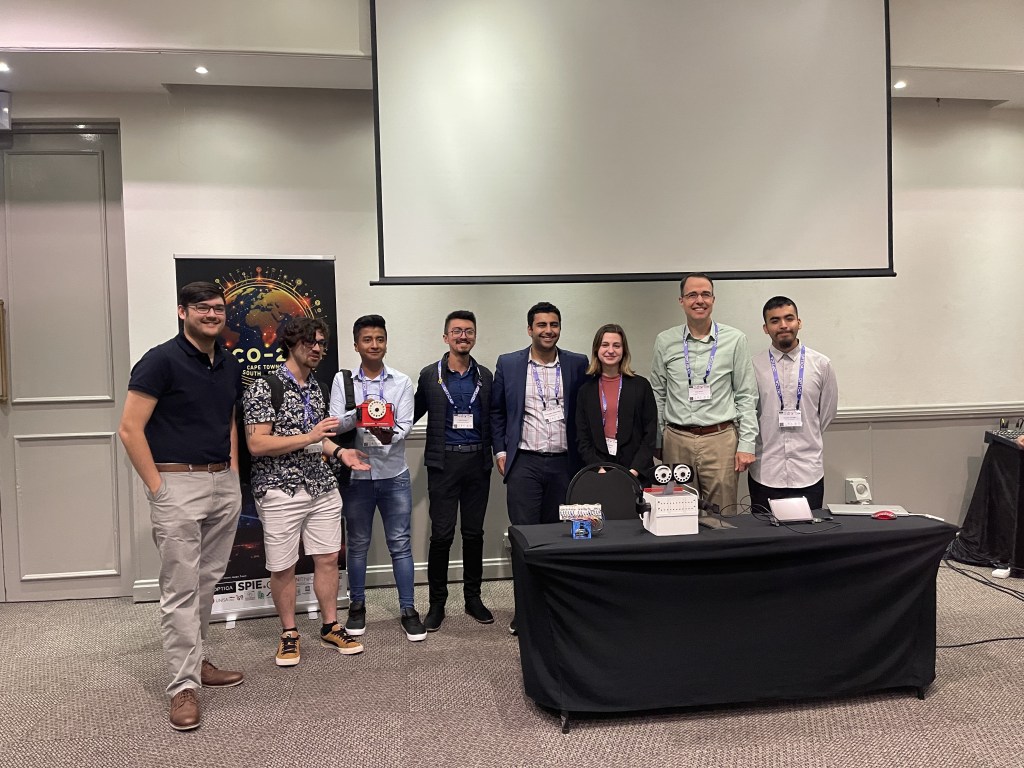
John Howell
I am leading this project with the help of many friends, colleagues and students. I am a professor of Physics at Chapman University. I work or have worked on various topics in classical and quantum optics: precision measurement, quantum entanglement, quantum key distribution, quantum cloning, compressive sensing, slow light, cloaking, and advanced radar systems. I am currently serving as the Past President of the International Commission for Optics (ICO). I was the director of the Center for Coherence and Quantum Optics at the University of Rochester from 2013 to 2017. I am a fellow of Optica and the recipient of the Presidential Early Career Award for Scientists and Engineers, the Adolf Lomb Medal from Optica and the Research Innovation Award. I have published over 100 scientific journal articles with over 10,000 Google Scholar citations.
Projects, Printers and Downloads: Readme
From here, you can read about what others have done in the PiMICS project. There will be an image of the camera associated with each project. At the end of each project, there will be a link to GitHub files associated with each project. These folders will include, at the very least a printer file for 3D printing and a Python file. Also, we make an assumption that you will have access to a 3D printer. If you do not have access to a 3D printer, find it inconvenient to use, or just want one, I highly recommend the Prusa 3D printers. I have six Prusa printers (4 Minis, 1 MK3S and 1 MK4S). I love them, especially the MK4S. But, if you have a limited budget, the partially assembled Mini is a great option. I have put many hours into researching 3D printers, and these are the most reliable printers I could find.
Angel Mendez and Juan Javier Naranjo from Quito Ecuador: Spectral and polarization analysis of nanostructured butterfly wings
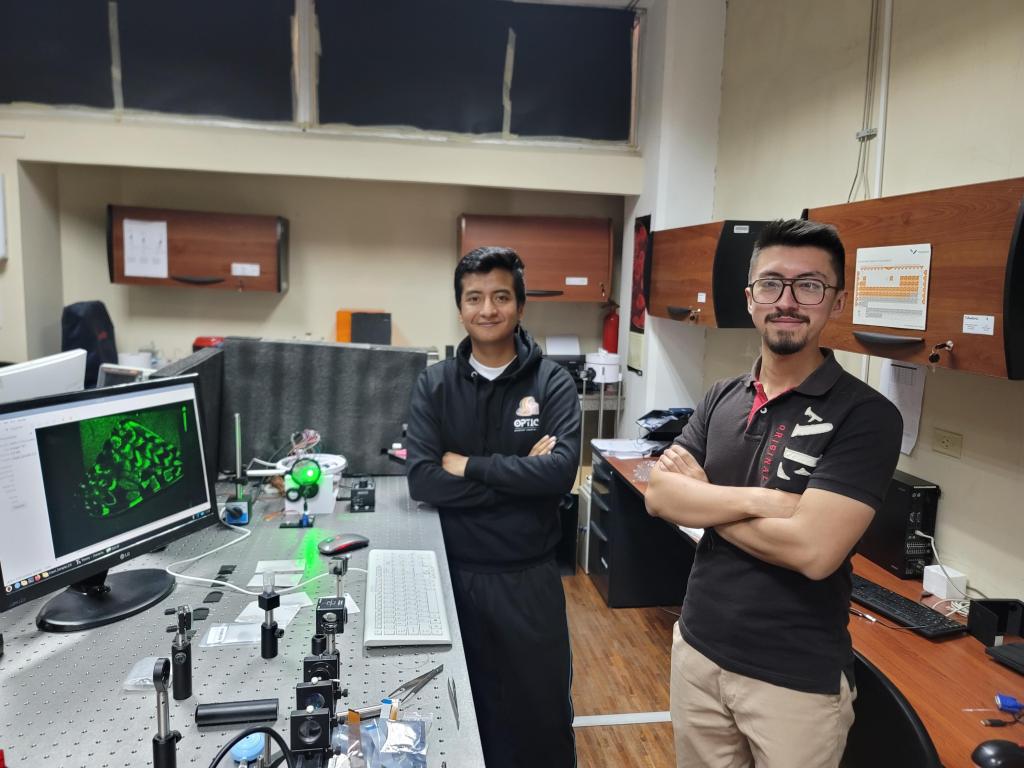
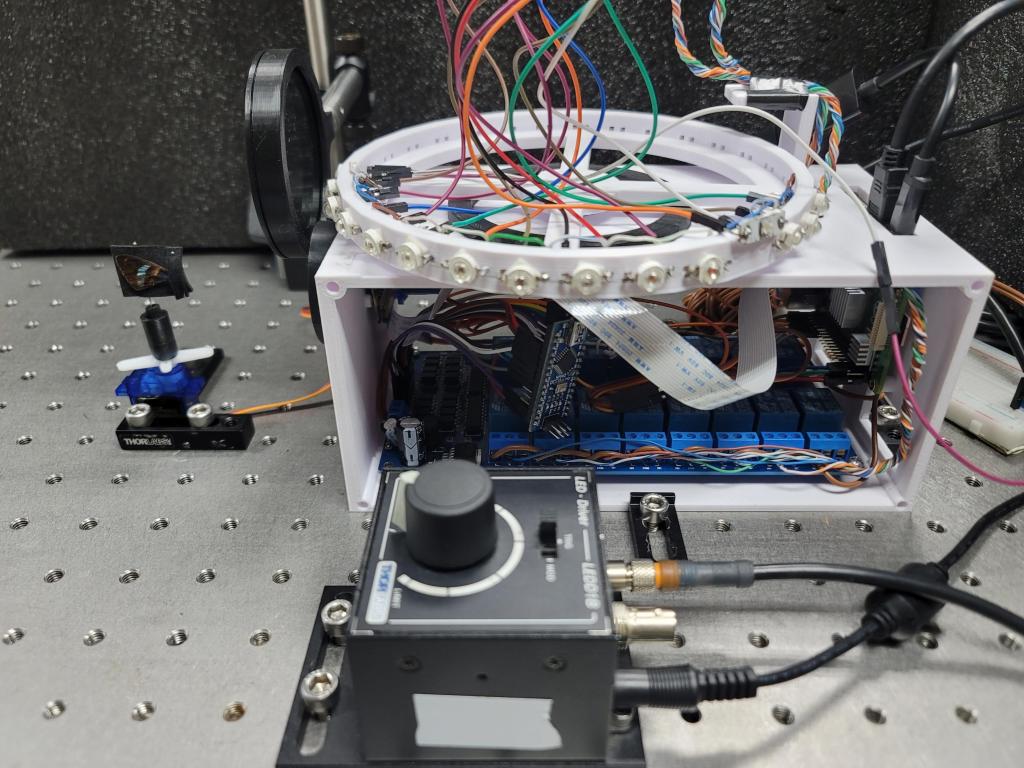
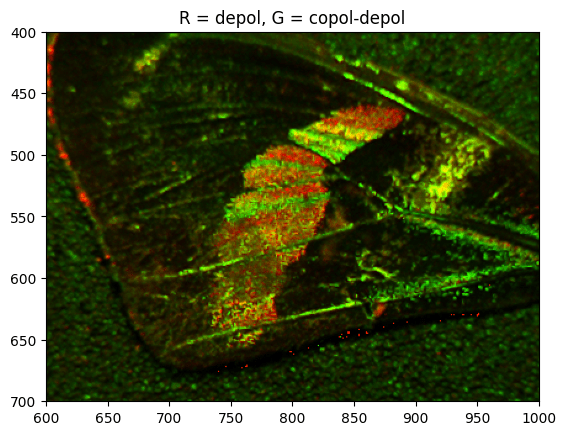
The iridescence observed in butterfly wings is the result of light interacting with nanometric structures embedded within the scales. These structures function as a diffraction grating or interference sheet, whereby the thickness of the layers and the configuration of the materials result in specific wavelengths of light being reinforced or cancelled, contingent on the angle of incidence and observation. Emergent structural colours are markedly contingent on the geometry and refractive index of the microstructures. In contrast to pigment colours, these colours are not susceptible to fading or discolouration over time, as they depend on shape and not on a chemical reaction.
Angel and Juan built their own multispectral camera (shown above). They used servo motors on their camera to get precise and repeatable LED illumination and to rotate their polarizers from parallel to cross-polarized. They were able to gain fantastic insights into the properties of iridescent wings. They also developed a nice graphical user interface using Tkinter. If you would like to download any of their files or content, click here.
Nicolas Carillo from Chapman University: Banana Ripeness
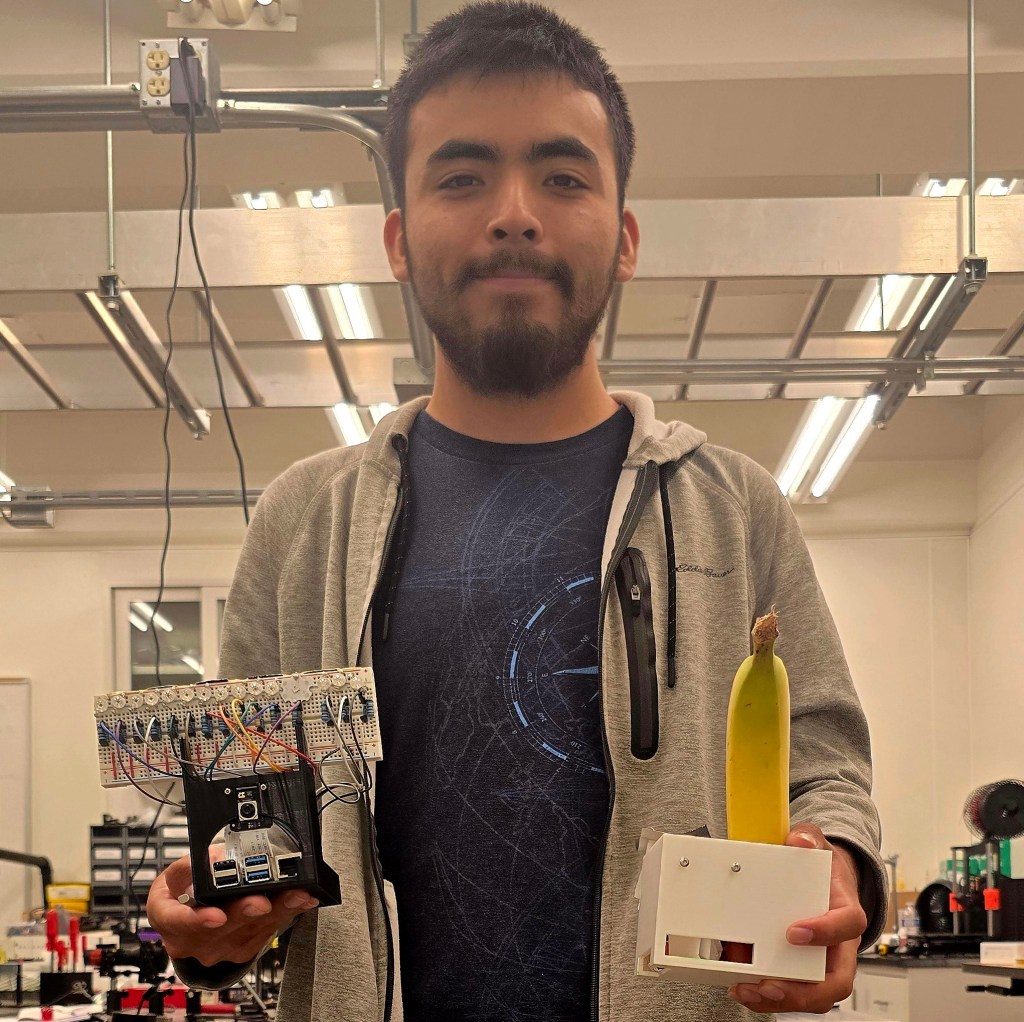
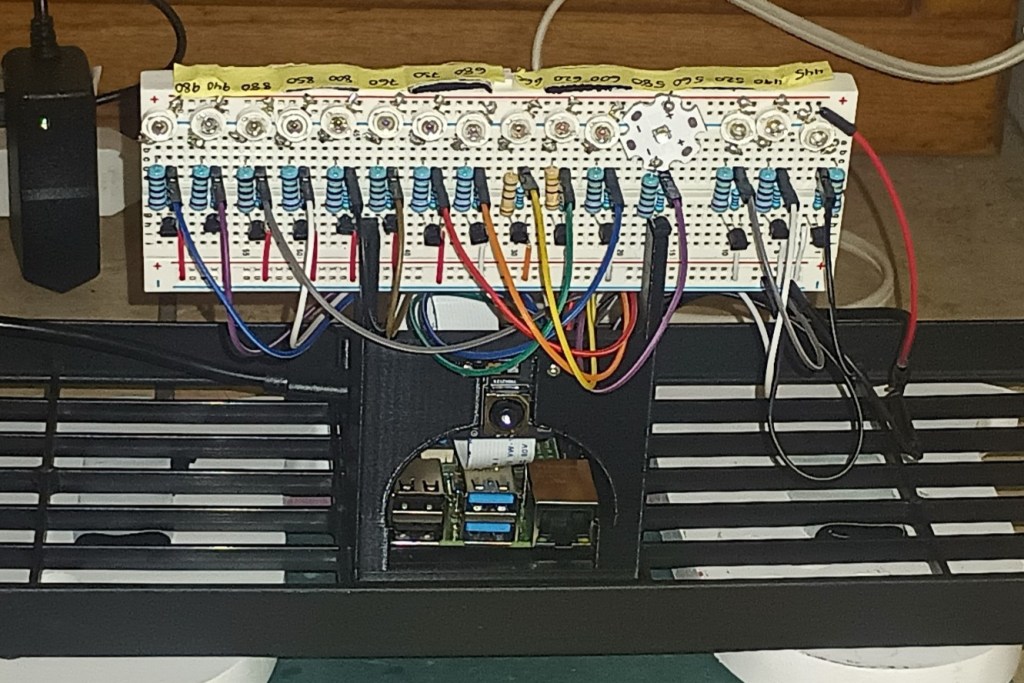
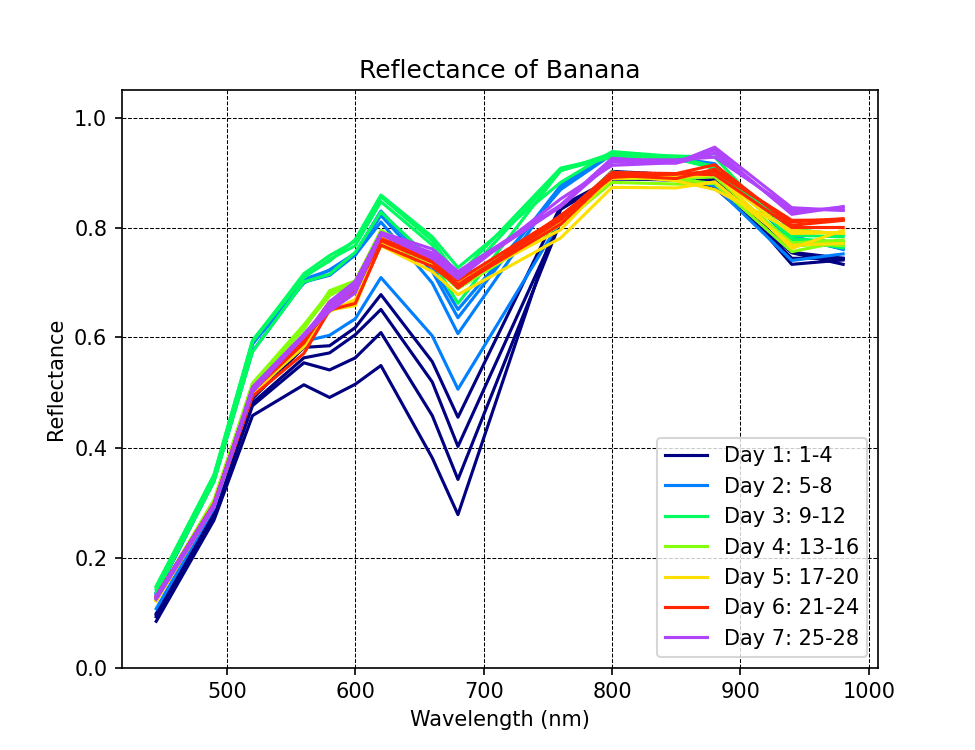
As bananas ripen, there are a host of interesting spectral dynamics that occur. Water, chlorophyll and sugar resonances in the spectrum all change. Nicolas studied the effects of banana ripeness on the reflectance spectra. He used a basic fixed-position, fixed-frequency LED array inside an enclosure (middle). He measured the average reflectance spectra from regions of the banana every 6 hours. This became the reference data. Stay tuned for a GitHub folder as well as an instructional video.
Melanin Content and Fruit Ripeness: South Africa
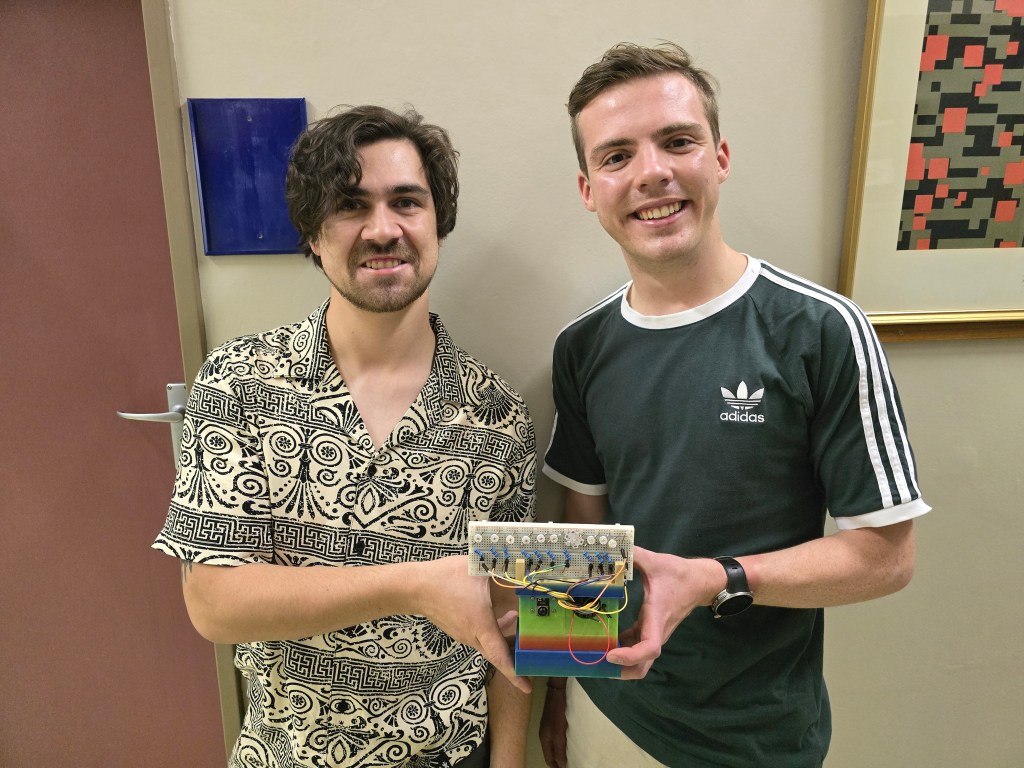
We are part of the Biophysics Research Group at the University of Pretoria in South Africa, specializing in researching the light-harvesting capabilities of pigment-protein samples. We were inspired by Prof. John Howell’s idea of constructing an affordable home-built multispectral camera (PiMiCS), and saw an opportunity to use this technology as an economically friendly preliminary stress-detection test for plants while they are still growing. Since light-harvesting capability can be influenced by external stresses, this approach could be invaluable to our research.
As this was our first venture into building a PiMiCS, we began with a prototype called PiMiCS Basic, where LEDs were mounted on a stationary breadboard rather than a rotational wheel. Preliminary tests included reflectance measurements on skin pigments to determine the accuracy of the camera compared to known results, as well as assessing the ripeness of fruits such as bananas and lemons by analyzing their reflectance. This project and these experiments were conducted as a 4th-year project by one of our students and paved the way for extending our research to our primary goal of detecting stress in growing plants.
 PiMICS.org