Disseminate
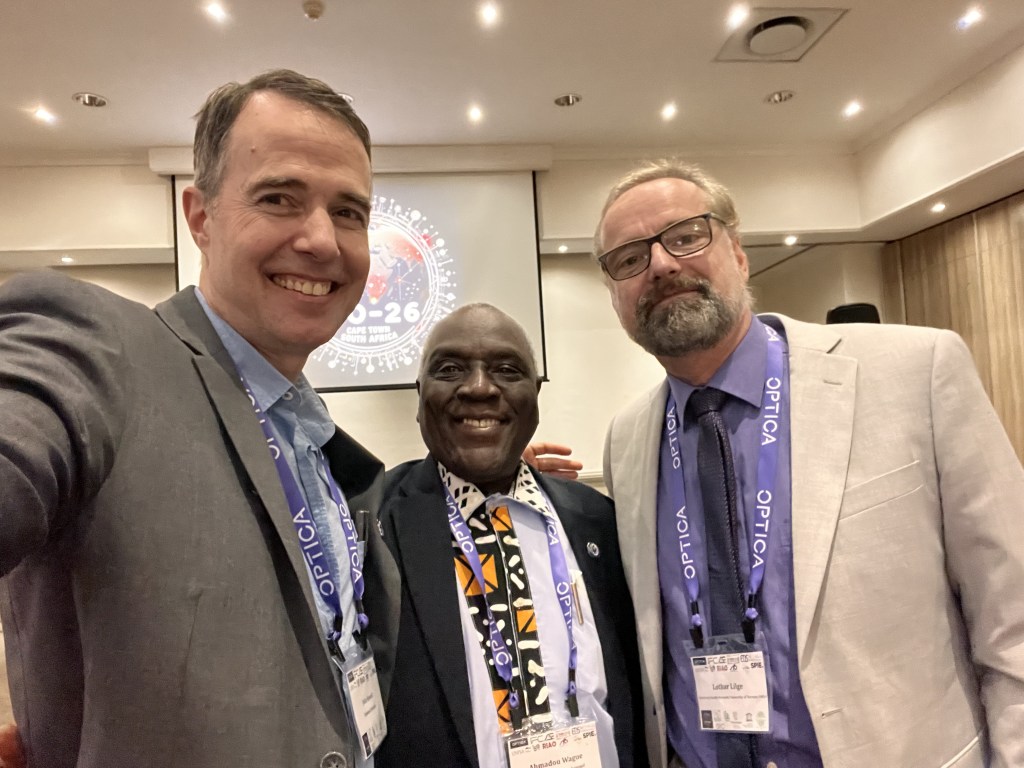
Our goal is to disseminate and build one thousand of these cameras by the end of 2026. There are scholar leaders in multiple developing countries who are eager to secure some of these cameras for their students. As an example, Ahmadou Wague (middle), the president of the LAM Network (a laser, optical, atomic and molecular society in Africa) is eager to get these cameras for his students in Senegal. To this point in time, it has been difficult to get equipment into developing countries. However, with the newly developed distribution networks set up by Amazon, we are now optimistic that many of the previous logistics challenges can be managed.
Demonstrate (Outreach)
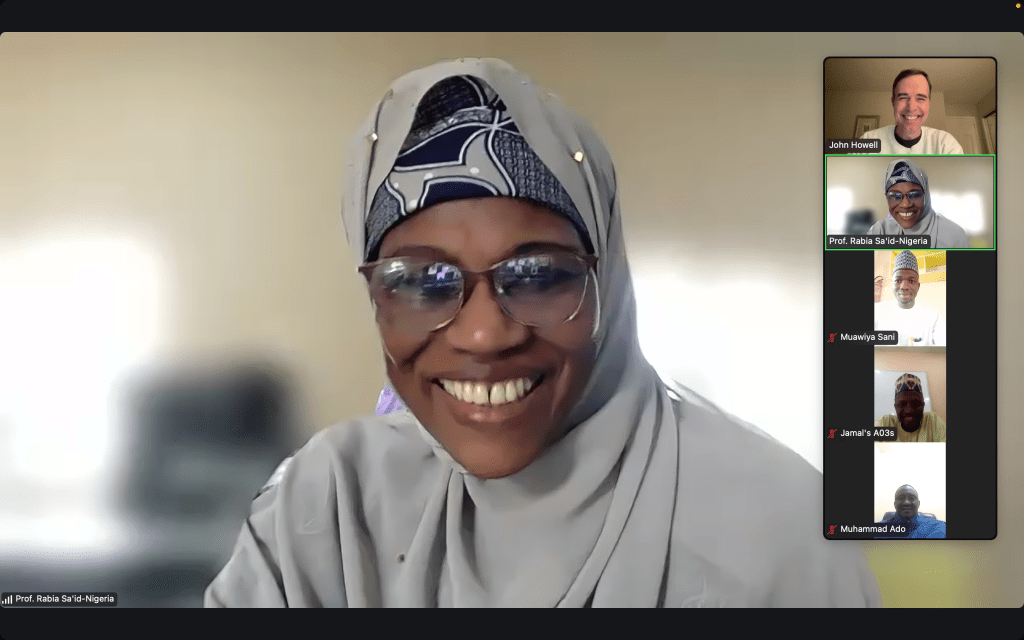
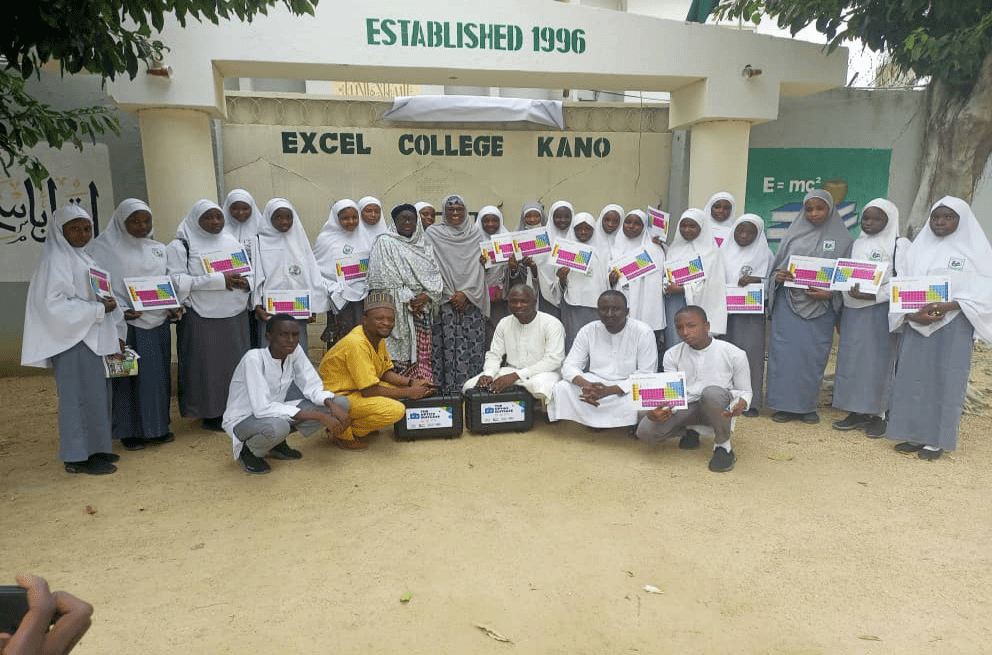
Our goal is one thousand outreach activities by the end of 2027. If you want to get things done in a big way, get the movers and shakers involved. This will be a massive outreach program throughout the world. Professor Rabia Said (above) in Nigeria, an amazing advocate for optics, and her supporting staff are demonstrating Optica optics kits as part of an ICO education initiative (also see image at the top of the page). She recently obtained funding from the USA State Department to continue these efforts. She and her staff will be building and demonstrating these cameras and optics kits in their many outreach activities in Nigeria.
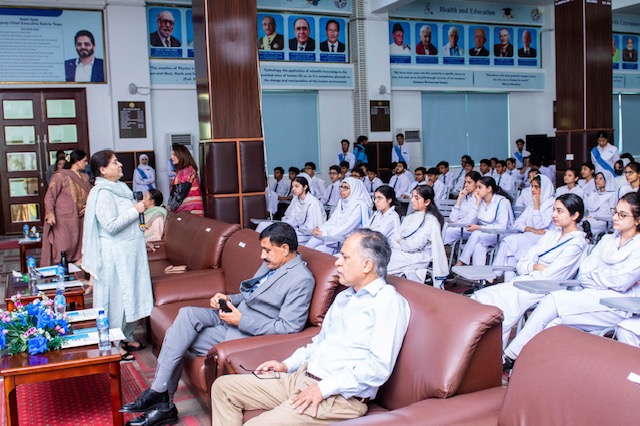
We will be working with Imrana Ashraf (above) in Pakistan to build and demonstrate these cameras on her frequent outreach activities.
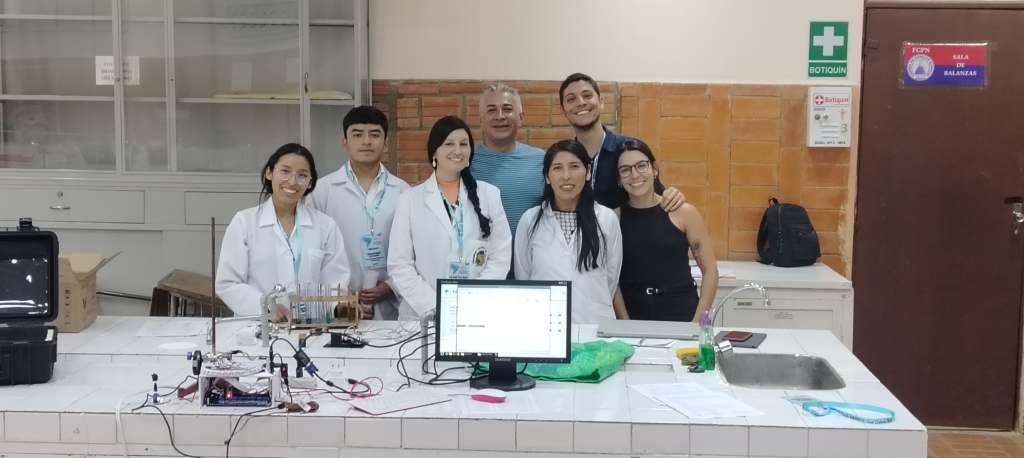
Our friends in Ecuador have already started doing outreach for their camera. The image above is their outreach in Bolivia sharing the camera that was used to measure the multispectral images of butterfly wings.
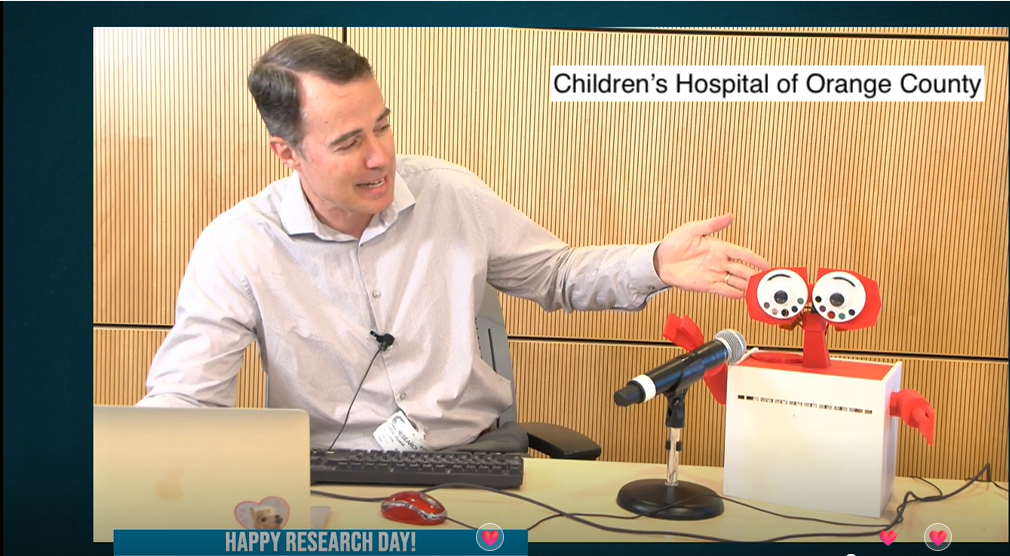
PiMICS and I give a broadcast lecture to children at Children’s Hospital of Orange County (CHOC).
Innovate
The primary aim of this program is to enable low-cost, hands-on physics experimentation for students in developing countries. A secondary, but almost equally important aim is to promote creativity and innovation. There are many ways that we can innovate. For one, PiMICS can be used as a basic research tool. Second, PiMICS can be improved in terms of its speed, resolution, spectral channels, cost, size, power etc. There can also be innovation in outreach, dissemination and education. We hope you will join us in making this happen. If you would like to participate click on the “Join the Collaboration” tab above.
One way I am improving PiMICS is by turning a few LEDs or low cost filters into a continuous hyperspectral measurement equivalent to hundreds of contiguous measurements through digital signal processing techniques. This changes a moderately powerful camera into a real workhorse allowing for cutting-edge research.
Collaborate
We want to collaborate with other like-minded individuals. As an example, after presenting the PiMICS program at the ICO 26 Congress, a colleague, Dr. Humberto Cabrera from the International Center for Theoretical Physics (ICTP), approached me about a similar project at the ICTP. He developed a Raspberry Pi-based microscope that was 3D printable. We want to combine forces to make a family of low-cost, 3D printable, Pi-based instrumentation that has the potential to revolutionize the way that labs are built. We expect other groups will want to join as well. Imagine being able to 3D print your own laboratory. It changes the dynamics of resource-constrained experimentation. See Join the Collaboration if you would like to participate.
 PiMICS.org