The Beginning: African Science Advisory Committee to the ICO
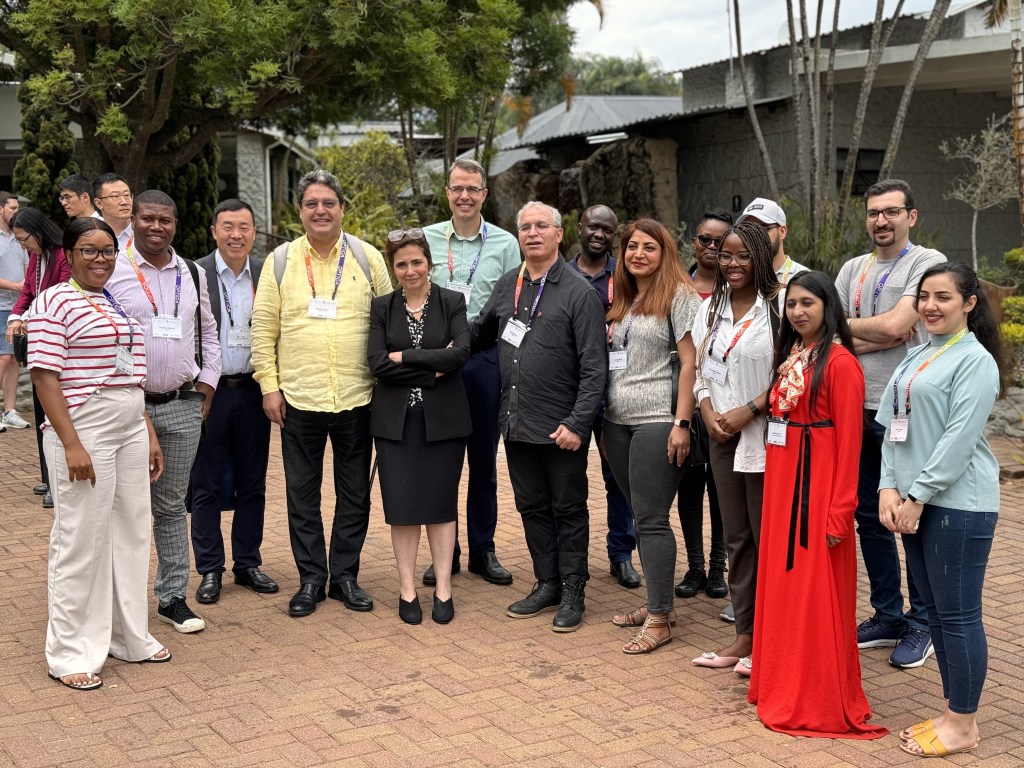
I served as the president of the International Commission for Optics (ICO) from 2021 to 2024 (term ended in October). At the beginning of my term, I assembled several researchers, scholars and educators from across the African continent to be a part of an African Science Advisory Committee to the ICO. During our subsequent meetings, I frequently heard of the desire for “capacity building”. This has many layers of meaning, but some included: building student skills in important technological domains, having hands-on active, learning activities and access to research equipment. I continued my discussions with major players in optics and photonics as well as with those who had worked in building successful educational programs in developing countries. I further served on the Education Committee of the ICO with Yaseera Ismail who has championed African optics and photonics. She has organized two ICO optics and photonics meetings in Africa through the principles and the ideas of the PiMICS program have been shared.
Did you know: I learned many things from my African colleagues and friends, some sad, some amazing. Did you know that many children die in Africa from the use of paraffin candles by which they read at night? The paraffin will leak, catch on fire and burn down their home. Malik Maaza, a dear friend an colleague has championed simple solar candles to solve this problem.
Did you know: I also learned about amazing organizations like the Africa Laser Center, which, on a budget of about a single investigator grant in the United States, can provide educational training to dozens of PhD students in world-class laboratories in South Africa. They have the capability to train up to 10 times as many PhDs from all across the continent, but simply don’t have the financial means to do so.
A Solution: Raspberry Pi-Based Low-Cost Experimentation
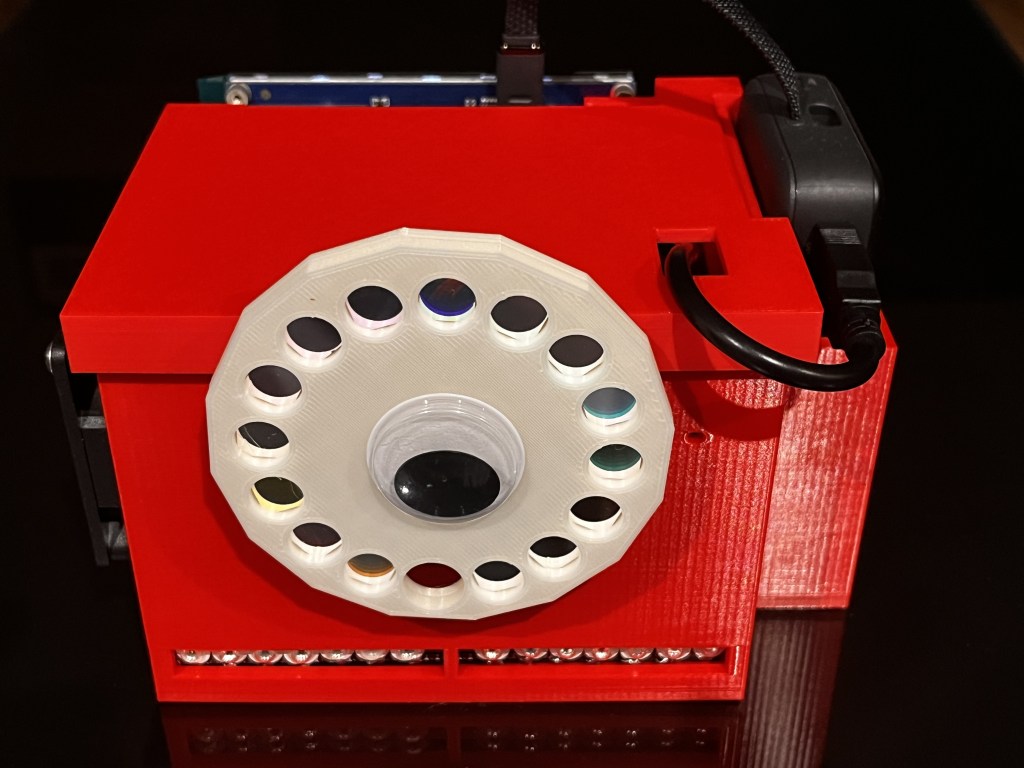
During one conversation with the IEEE Photonics Society, I learned that they ran a Raspberry Pi program they used as an educational tool. While I didn’t get any detail about the program, I had had similar aspirations for using the Raspberry Pi as an educational tool. For those who are not familiar, a Raspberry Pi is a single board computer roughly the size of a credit card. It is inexpensive (about $30-$80), is small (about the length and width of a credit card and a couple centimeters high), weighs very little (47 grams or about 1.65 ounces), and draws very little power (a standard power bank for a phone can operate it for many hours). It has a dedicated slot for a low-cost, high resolution camera costing as little as $5.
In 2023, I had an idea of making a low-cost multi-spectral or hyper-spectral camera from the Raspberry Pi. I announced this at the Optics and Photonics Africa 2023 conference in South Africa. The idea was to use the Raspberry Pi, its camera, and the general purpose input/output (GPIO) pins to drive LEDs and/or filter wheels for building multispectral cameras. Multi-spectral or hyper-spectral cameras are incredibly important tools in agriculture, medicine, pharmacy, recycling, pollution management, quality control etc.. Hundreds of research papers have been written on the value of these cameras in agriculture alone. These imaging modalities in agriculture, for example, are rapidly expanding with the potential to significantly enhance crop yields, reduce water usage, check nitrogen content, have an early detection monitoring system for plant diseases and much much more. I knew a successful educational program in building multispectral cameras could not only greatly increase student capacity, but improve infrastructure capabilities in their home countries. From these ideas was born the Raspberry Pi multispectral imaging camera system (PiMICS).
I developed a pilot program using a small amount of funds from Chapman University and supported by the ICO. Undergraduate students in South Africa, Ecuador and the United States began designing, building and testing their cameras. They used multispectral analysis to study plant health, water stress in plants, melanin in skin, fruit (bananas, apples, avocados, and lemons) ripeness and nanostructured iridescence in butterfly wings (see “People and Projects”). The program gave the students important skills in 3D modeling, 3D printing, systems integration, electronics, feedback, control, Python programming, image analysis and spectroscopy. Their results were presented at the 26th general assembly of the ICO and were received with great enthusiasm.
The surprise for me wasn’t just the many researchers in developing nations that wanted to have their students build these cameras, but the enthusiasm for the project by researchers in general. They wanted a broad skills-developing project where students could learn the ropes before being set loose in their laboratories. The PiMICS program allows students to build their own experiments from scratch rather than a pre-canned experiment so common in undergraduate laboratories today.
 PiMICS.org